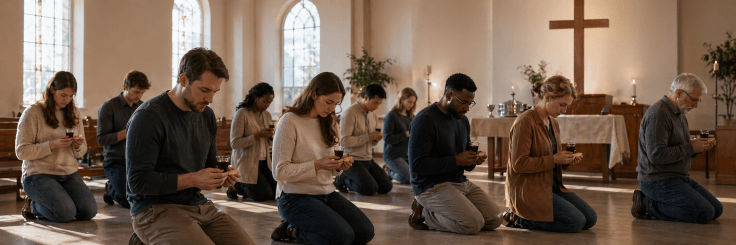
 Why Observe the Lord’s Supper
Introduction
Why should we observe the Lord’s Supper? This question does not arise from human need, but from God’s revelation and command.
The institution of the Lord’s Supper is not a product of historical development within the church, but an act personally established by Christ. On the night He was betrayed, He clearly said to His disciples: “Do this in remembrance of Me” (Luke 22:19; 1 Corinthians 11:23–25). This is not a suggestion, but a command, indicating that the Lord’s Supper is a spiritual practice that God requires the church to continue observing.
However, the meaning of the Lord’s Supper goes beyond this. If it is understood only from a New Testament perspective, its deeper foundation can easily be overlooked. The Scripture clearly states: “For Christ, our Passover lamb, has been sacrificed” (1 Corinthians 5:7), showing that the work of Christ is the fulfillment of the Old Testament Passover.
Therefore, the Lord’s Supper is not an isolated ritual, but a crucial act that carries forward the Old Testament into the New Testament. In the Old Testament, the Passover lamb’s blood spared people from judgment; in the New Testament, Christ becomes the true Lamb, accomplishing redemption, and the Lord’s Supper is the means by which believers enter into this fulfillment.
This reveals an important principle:
The Lord’s Supper is not only an act of remembrance, but also a key expression of the transition in redemptive history from shadow to reality.
Conclusion
The Lord’s Supper is a command personally instituted by Christ, the fulfillment of the Passover in Him, and an essential act through which believers enter into the reality of redemption.
Key Scriptures:
(Luke 22:19–20) “And He took bread, gave thanks and broke it, and gave it to them, saying, ‘This is My body given for you; do this in remembrance of Me.’ In the same way, after supper He took the cup, saying, ‘This cup is the new covenant in My blood, which is poured out for you.’”
(1 Corinthians 11:23–25) “For I received from the Lord what I also passed on to you: The Lord Jesus, on the night He was betrayed, took bread, and when He had given thanks, He broke it and said, ‘This is My body, which is for you; do this in remembrance of Me.’ In the same way, after supper He took the cup, saying, ‘This cup is the new covenant in My blood; whenever you drink it, do this in remembrance of Me.’”
(1 Corinthians 5:7) “Get rid of the old yeast so that you may be a new unleavened batch—as you really are. For Christ, our Passover lamb, has been sacrificed.”
The Original Meaning of the Lord’s Supper
⚠️ In the New Testament, there is no single specific term that directly corresponds to “the Lord’s Supper.” The concept is expressed through multiple terms in different contexts. “The Lord’s Supper” is a theological designation formed later in church history, not a term explicitly used in the original New Testament text.
The Origin of the Term “Lord’s Supper” (Traditional Church Usage)
In church history, two main terms are commonly used:
1. ΕΥ̓ΧΑΡΙΣΤΊΑ (EUCHARISTIA)
This is one of the most common names for the Lord’s Supper, meaning “thanksgiving” or “gratitude.”
It comes from the verb εὐχαριστέω (eucharisteō), meaning “to give thanks.”
Scriptural basis: When the Lord instituted the Supper, He “gave thanks”
(Luke 22:19):
“And He took bread, gave thanks, broke it, and gave it to them, saying: This is My body given for you; do this in remembrance of Me.”
[Give thanks] Original: εὐχαριστήσας (eucharistēsas); Root: εὐ (eu “good”) + χάρις (charis “grace”); Basic meaning: “to give thanks, to express gratitude.”
2. ΚΟΙΝΩΝΊΑ (KOINŌNIA)
Meaning “fellowship, sharing, participation, union.”
Scriptural basis:
(1 Corinthians 10:16)
“The cup of blessing that we bless, is it not a participation in the blood of Christ? The bread that we break, is it not a participation in the body of Christ?”
[Participation] Original: κοινωνία (koinōnia); Root: κοινός (koinos “common, shared”); Basic meaning: “sharing, participation, fellowship.”
3. ΔΕΙ͂ΠΝΟΝ (DEIPNON, banquet/meal)
Scriptural basis:
(1 Corinthians 11:20)
“When you come together, it is not the Lord’s Supper you eat.”
Original focus: The Lord’s Supper is called “the Lord’s meal,” indicating that its nature is a spiritual banquet, emphasizing fellowship with the Lord.
⚠️ Important note:
[Supper/meal] Original: δεῖπνον (deipnon); Root: δειπ- (deip- “to eat, to dine”); Basic meaning: “a meal, banquet.”
In Greek culture, δεῖπνον refers to the main meal of the day, often with social and communal significance. The word itself does not emphasize “evening time,” but rather the idea of the “principal meal.” Therefore, translating it as “supper” (evening meal) reflects cultural habit, not the inherent meaning of the word.
Why it is often translated as “supper”:
In ancient Greek and Jewish culture, the main meal was typically eaten after the day’s work.
Key point: δεῖπνον emphasizes the nature of a principal meal or banquet, not the time of evening. The translation “supper” is culturally based, not linguistically required.
4. ἈΝΆΜΝΗΣΙΣ (ANAMNESIS, remembrance)
Scriptural basis:
(Luke 22:19)
“And He took bread, gave thanks, broke it, and gave it to them, saying: This is My body given for you; do this in remembrance of Me.”
(1 Corinthians 11:24–25)
“And when He had given thanks, He broke it and said: This is My body, which is for you; do this in remembrance of Me. In the same way, after supper He took the cup, saying: This cup is the new covenant in My blood; whenever you drink it, do this in remembrance of Me.”
Original emphasis: “Remembrance” here is not merely recalling the past, but bringing the death of Christ into the present, making it a real and experiential spiritual reality.
Conclusion
In the original language, the Lord’s Supper contains four core meanings:
Thanksgiving (εὐχαριστία) + Union (κοινωνία) + Banquet (δεῖπνον) + Remembrance (ἀνάμνησις).
The term “Holy Communion” used in the church today is derived from both the action and its meaning; it is not a direct biblical term. If one were to choose a more precise biblical expression, the phrase κυριακὸν δεῖπνον (kyriakon deipnon, “the Lord’s banquet”) in (1 Corinthians 11:20) would be the most accurate.
The Meaning of the Lord’s Supper
1. Remembering Christ
(Luke 22:19) “And He took bread, gave thanks and broke it, and gave it to them, saying: This is My body given for you; do this in remembrance of Me.”
(1 Corinthians 11:24–25) “And when He had given thanks, He broke it and said: This is My body, which is for you; do this in remembrance of Me. In the same way, after supper He took the cup, saying: This cup is the new covenant in My blood; whenever you drink it, do this in remembrance of Me.”
Meaning:
The word “remembrance” (ἀνάμνησις) does not merely point to the death of Christ, but to His entire person and the whole of His work.
When the Lord says “remember Me,” it is not about recalling a single moment, but about remembering:
His identity, His teaching, His obedience, His path, and everything He has accomplished.
Therefore, remembrance in the Lord’s Supper is to bring the whole person of Christ into the present, so that believers are realigned with Him through participation, rather than merely recalling a past event. This corresponds with the Lord’s call to His disciples: “Whoever wants to follow Me must deny themselves and take up their cross and follow Me” (Matthew 16:24), showing that remembrance is not only a mental reflection, but a life of following and alignment.
2. Proclaiming the Lord’s Death
(1 Corinthians 11:26) “For whenever you eat this bread and drink this cup, you proclaim the Lord’s death until He comes.”
[Proclaim] Original: καταγγέλλω (katangellō); Root: ἀγγέλλω (angellō “to announce, to declare”); Basic meaning: “to proclaim, to declare.”
Meaning: The Lord’s Supper is not only remembrance, but also proclamation.
The word “proclaim” (καταγγέλλω, katangellō) means to publicly declare. Therefore, every time the bread is eaten and the cup is drunk, it is not only an inward remembrance, but also an outward testimony:
A declaration that Christ’s death has taken place and carries the purpose of the gospel.
This shows that the Lord’s Supper is not a silent ritual, but an act of witness.
At the same time, the phrase “until He comes” gives it a clear time dimension: it looks back to the accomplished death of Christ, while also calling the church to continue observing it until His return.
3. Receiving the Life of the Lord
(John 6:53–57) “Jesus said: Truly, truly, I tell you, unless you eat the flesh of the Son of Man and drink His blood, you have no life in you. Whoever eats My flesh and drinks My blood has eternal life, and I will raise them up at the last day. For My flesh is true food and My blood is true drink. Whoever eats My flesh and drinks My blood remains in Me, and I in them. Just as the living Father sent Me and I live because of the Father, so the one who feeds on Me will live because of Me.”
(1 Corinthians 10:16) “Is not the cup of blessing that we bless a participation in the blood of Christ? And is not the bread that we break a participation in the body of Christ?”
Meaning: The Lord’s Supper is not only remembrance and proclamation, but also involves receiving life.
The “eating” and “drinking” here do not refer to physical consumption, but to spiritual reception, showing that through participation, believers enter into a real spiritual relationship and effect with the life of Christ by faith.
The Scripture emphasizes:
“The one who eats… will live because of Me,” which echoes the promise of the tree of life.
(Genesis 2:9) “The Lord God made all kinds of trees grow out of the ground… including the tree of life in the middle of the garden…”
(Revelation 2:7) “To the one who is victorious, I will give the right to eat from the tree of life, which is in the paradise of God.”
Explanation:
⚠️ The Lord’s Supper not only expresses faith, but involves life, and must not be treated casually:
Because it is not merely symbolic, but points to the life supply that comes from Christ.
4. The Unity of the Church — Spiritual Fellowship
(1 Corinthians 10:16–17) “Is not the cup of blessing that we bless a participation in the blood of Christ? And is not the bread that we break a participation in the body of Christ? Because there is one bread, we who are many are one body, for we all partake of the one bread.”
Meaning: The “participation” (κοινωνία) in the Lord’s Supper not only points to union with Christ, but directly to the unity of the church.
The focus of the passage is not “I partake,” but “we partake.”
It does not emphasize individual spiritual experience, but that many, sharing one bread and one cup, become one body.
The logic is clear: because we partake of one bread → therefore we are one body.
Conclusion:
One essential nature of the Lord’s Supper is to manifest the unity of the church, not to emphasize individual spirituality.
The “participation” in the Lord’s Supper is not fundamentally individual, but corporate—it is the actual expression of the church as one body.
5. Union with Christ
(John 6:56) “Whoever eats My flesh and drinks My blood remains in Me, and I in them.”
Meaning:
The Lord’s Supper not only allows one to receive life, but also brings forth the reality of union.
The word “remains” (μένω, menō) emphasizes a continuous state, not a temporary experience.
“To be in Me, and I in them” shows that this union is mutual:
Believers are in Christ, and Christ is in believers.
This corresponds with “participation” (κοινωνία), showing that the Lord’s Supper is not merely an outward symbolic act, but points to a real spiritual union, bringing believers into an ongoing and inward relationship with Christ.
Conclusion:
The Lord’s Supper not only imparts life, but also expresses and sustains a continuous and real spiritual union between believers and Christ.
6. The Lord’s Own Table
(1 Corinthians 11:20) “When you come together, it is not the Lord’s Supper you eat.”
(1 Corinthians 11:27–29) “So then, whoever eats the bread or drinks the cup of the Lord in an unworthy manner will be guilty of sinning against the body and blood of the Lord. Everyone ought to examine themselves before they eat of the bread and drink from the cup. For those who eat and drink without discerning the body eat and drink judgment on themselves.”
Meaning:
The Lord’s Supper is called “the Lord’s Supper,” and the emphasis is not on form, but on ownership.
The word “Lord’s” (κυριακόν) indicates:
⚠️ This is not man’s table, but entirely belongs to the Lord.
Therefore, it must never be carried out according to human will,
nor can people participate however they wish.
The Scripture clearly states:
“To eat… in an unworthy manner… is to sin against the body and blood of the Lord.”
This shows that the issue is not whether one participates, but how one participates.
Thus, the Lord’s Supper is not about indifference to what is eaten,
but emphasizes that it must be observed according to the Lord’s way and in the proper condition.
It is an act that requires discernment, self-examination, and reverence.
Conclusion:
The Lord’s Supper is the Lord’s table, and must be approached carefully under His authority, not treated casually according to human desire.
7. A Response of Thanksgiving
(Luke 22:19) “And He took bread and gave thanks…”
Meaning:
The Lord’s Supper begins with “giving thanks” (εὐχαριστέω), showing that the entire act starts with gratitude, not with eating.
This reveals:
The Lord’s Supper is not merely an outward act, but an inward response.
Without thanksgiving, one cannot truly understand Christ’s sacrifice.
Because thanksgiving itself is the acknowledgment of salvation;
without it, it shows that one has not truly seen the grace of the cross.
(Isaiah 53:4–6) “Surely He took up our pain… by His wounds we are healed.”
(Psalm 22:12–16) “Many bulls surround Me… they pierce My hands and My feet.”
(Luke 9:58) “Foxes have dens and birds have nests, but the Son of Man has no place to lay His head.”
(Romans 4:25) “He was delivered over to death for our sins and was raised to life for our justification.”
(2 Corinthians 8:9) “Though He was rich, yet for your sake He became poor…”
(Matthew 27:18–50) “…they crucified Him… and Jesus cried out again with a loud voice and gave up His spirit.”
Therefore, when one participates without a heart of thanksgiving:
Not only will one fail to enter the true meaning of the Lord’s Supper,
but the heart may become hardened, even indifferent to Christ’s sacrifice.
In other words:
Without thanksgiving, there is no true Lord’s Supper;
without thanksgiving, one cannot enter into the reality of salvation;
without thanksgiving, the true value of receiving life cannot be realized.
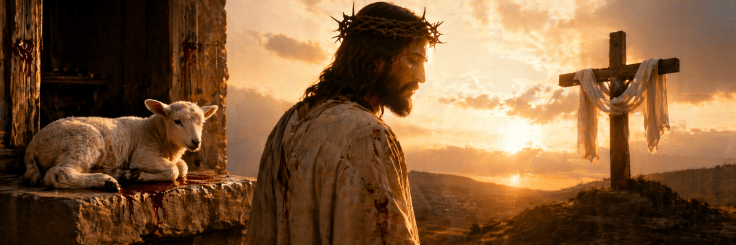
Christ Is the Passover Lamb
Introduction
Understanding the relationship between Christ and the Passover is the most fundamental and crucial theological foundation for understanding the Lord’s Supper. The Lord’s Supper is not an independent ritual; it is the fulfillment built upon the Passover. Without recognizing this, one may easily treat the Lord’s Supper as a continuation or replacement, while missing its true nature as the transition from shadow into reality.
The Scripture clearly reveals this relationship:
(1 Corinthians 5:7) “…For Christ, our Passover lamb, has been sacrificed.”
⚠️ This verse is not merely a comparison, but a declaration:
The Old Testament Passover has been realized, fulfilled, and completed in Christ.
➡️ Therefore, the key is not just “correspondence,” but this:
Everything prescribed in the Old Testament reaches its true purpose in Christ.
The Lord Himself also made this clear:
(Matthew 5:17) “Do not think that I have come to abolish the Law or the Prophets; I have not come to abolish them but to fulfill them.”
➡️ This shows that the New Testament does not lower the standard, nor simplify the requirement, but brings what was foreshadowed in the Old Testament into full reality and completion.
In the Old Testament, the observance of the Passover was extremely precise—from the selection of the lamb, to the timing of its slaughter, to the application of the blood and the manner of eating—everything had to be carried out exactly according to God’s command.
This reveals a principle:
What belongs to God’s redemption is never something man can handle casually. Yet the Old Testament is only a shadow, while the reality is in Christ. When Christ has fulfilled all things, what people face is no longer the shadow, but the reality itself. (Colossians 2:17) “These are a shadow of the things that were to come; the reality, however, is found in Christ.”
Therefore, the logic is absolutely not: that the New Testament allows greater looseness. Rather: since we have entered into the reality, it must not be treated lightly. The Lord’s Supper must be understood within this structure of fulfillment:
⚠️ It is not a weakening of the Old Testament, but its realization; not a reduction of requirement, but an entrance into a deeper and more real dimension.
The Practice and Attitude of the Old Testament Passover
| Item | Method (Old Testament Requirement) | Revealed Attitude |
|---|---|---|
| Selection of the lamb | Must be without defect, a one-year-old male lamb (Exodus 12:5) | Purity in offering; not casual, must be the best |
| Time requirement | Slaughtered at twilight on the fourteenth day of the first month (Exodus 12:6) | Obedience to God’s appointed time; not to be altered |
| Application of blood | Blood applied to the doorposts and lintel (Exodus 12:7) | Salvation must be applied in God’s way; cannot be omitted |
| Manner of eating | Roasted with fire; not eaten raw or boiled (Exodus 12:8–9) | Complete obedience to God’s instruction; no personal adjustment |
| Accompanying food | Eaten with unleavened bread and bitter herbs (Exodus 12:8) | Remembrance of sin and suffering; a serious attitude |
| State of eating | Belt fastened, sandals on feet, staff in hand (Exodus 12:11) | Readiness to respond to God’s action; alertness |
| Time limit | Must be eaten that night; nothing left until morning (Exodus 12:10) | No delay, no neglect; complete obedience |
| Purity requirement | Remove all leaven for seven days (Exodus 12:15) | Separation from sin; no mixture allowed |
| Eligibility | The uncircumcised may not eat (Exodus 12:48) | Must be within the covenant; not open participation |
| Execution principle | “You shall observe this as a lasting ordinance” (Exodus 12:24) | Overall attitude: reverence, obedience, precision |
Conclusion:
Every detail of the Passover demonstrates that salvation must be received according to God’s appointed way, and man cannot participate in it casually.
How to Administer the Lord’s Supper
1. Frequency and Timing
It must be continually observed until the Lord returns.
Key Scripture: (1 Corinthians 11:26) “…For whenever you eat this bread and drink this cup, you proclaim the Lord’s death until He comes.”
“Until He comes” clearly indicates that the Lord’s Supper is not a temporary practice, but a continual observance throughout the entire church age. This is not optional, but an action instituted by the Lord that must be faithfully maintained. As long as the church remains on earth, the Lord’s Supper must not cease; it itself is one of the signs of the church’s existence within redemption.
Therefore, the issue is not whether to observe it, but whether it is faithfully maintained until the Lord returns.
No restriction on specific days or times
Regarding days:
Unlike the Old Testament Passover, the Lord’s Supper in the New Testament is fulfilled and can be observed on any day or occasion.
Key Scriptures:
(Galatians 4:10–11) “You observe special days and months and seasons and years! I fear for you, that somehow I have wasted my efforts on you.”
(Colossians 2:16–17) “Therefore do not let anyone judge you by what you eat or drink, or with regard to a religious festival, a New Moon celebration or a Sabbath day. These are a shadow of the things that were to come; the reality, however, is found in Christ.”
The apostolic warning against observing “days and months and seasons and years” points to a deviation: turning spiritual matters into external time-based systems. Therefore, the Lord’s Supper must not be institutionalized into a fixed calendar date. Its foundation is not in time, but in the completed redemption of Christ.
However, observing the Lord’s Supper during Passover is not wrong, since it carries typological significance in relation to fulfillment. The key point is that it must not be restricted to Passover only, otherwise it returns to a time-based system.
Regarding time:
The Scripture does not specify a fixed time of day. Even though it is translated as “supper” (1 Corinthians 11:20), this is not the emphasis of the original text, but a cultural interpretation.
It is also worth noting that the Lord’s suffering took place during the day; therefore, the time of observance need not be limited to evening or daytime.
Conclusion:
Since the Lord’s Supper is “in remembrance of the Lord” and for fellowship with Him, it should not be restricted in frequency, but continued until His return.
2. The Elements of the Lord’s Supper
Use unleavened bread:
In the Old Testament, the Passover required no leaven.
(Leviticus 23:4–6) “These are the appointed festivals of the Lord… On the fourteenth day of the first month at twilight the Lord’s Passover begins. On the fifteenth day… the Festival of Unleavened Bread… for seven days you must eat bread made without yeast.”
(Exodus 34:25) “Do not offer the blood of My sacrifice with anything containing yeast.”
Likewise, the bread used by the Lord in the Supper was unleavened:
(1 Corinthians 5:6–8) “…Don’t you know that a little yeast leavens the whole batch? Get rid of the old yeast… For Christ, our Passover lamb, has been sacrificed. Therefore let us keep the festival… with the unleavened bread of sincerity and truth.”
[Unleavened] In the original text, there is no explicit word for “bread” (ἄρτος), but rather “unleavened things” (ἀζύμοις). This term is general, referring to anything without leaven, and by contrast includes all leavened elements—not only physically, but also symbolically representing sin and corruption.
Use only one bread:
The bread symbolizes the body of the Lord.
(1 Corinthians 11:24) “This is My body, which is for you…”
(Luke 22:19) “This is My body given for you…”
The body of the Lord is one.
(Ephesians 4:4) “There is one body and one Spirit…”
Key Scripture: (1 Corinthians 10:16–17) “…Is not the bread that we break a participation in the body of Christ? Because there is one bread, we who are many are one body…”
In the original text, both “one bread” and “one body” are clearly singular.
Conclusion: Regardless of the number of participants, only one bread should be used, with its size adjusted according to the number of people.

Use grape juice:
Key Scriptures:
(Matthew 26:28–29) “…I will not drink from this fruit of the vine from now on until that day when I drink it new with you in My Father’s kingdom.”
(Mark 14:24–25) “…I will not drink again from the fruit of the vine until that day when I drink it new in the kingdom of God.”
[Grape juice] Original: γενήματος τῆς ἀμπέλου (genēmatos tēs ampelou); Basic meaning: “that which is produced from the vine.”
⚠️ The original text emphasizes what is naturally produced, highlighting its origin from growth, not from processed transformation.
❌ The word “wine” does not appear in the original text; translating it directly as “wine” is interpretive, not textual.
No mixture:
The grape juice in the Supper is set apart in spiritual meaning as the blood of Christ, and therefore must not be mixed.
(Matthew 26:27–28) “…This is My blood of the covenant, which is poured out for many for the forgiveness of sins.”
Blood represents life and must be treated with seriousness:
(Leviticus 17:11) “For the life of a creature is in the blood…”
If even animal blood carries such spiritual significance and must be treated carefully, how much more should the blood of Christ be received with reverence and purity?
It must be without blemish or impurity:
Wine, being fermented, cannot represent the sinless blood of Christ. Likewise, using other substances or mixing additional elements is inappropriate.
Key Scriptures:
(1 Peter 1:18–19) “…with the precious blood of Christ, a lamb without blemish or defect.”
(Malachi 1:7) “You offer defiled food on My altar. But you ask, ‘How have we defiled You?’ By saying that the table of the Lord is contemptible.”
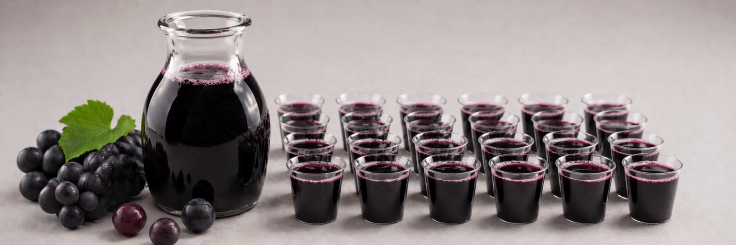
3. The Place of the Lord’s Supper
It should be received together in one place.
When partaking, there must be reverence and order. Participants should wait for one another; there must be no confusion or disorder, nor should it be taken outside the gathering, but received together in one place.
(1 Corinthians 11:33) “So then, my brothers and sisters, when you gather to eat, you should all eat together.”
This principle is consistent with the Old Testament: all wait together, receive together, and complete it together in one place.
(Exodus 12:46) “It must be eaten inside the house; take none of the meat outside the house…”
Preparation Before Taking the Lord’s Supper
1. It must be conducted in the name of the Lord Jesus
(Colossians 3:17) “And whatever you do, whether in word or deed, do it all in the name of the Lord Jesus, giving thanks to God the Father through Him.”
Explanation: The Lord’s Supper is not an ordinary gathering, but an act that belongs to the Lord. Therefore, it must be carried out in His name, indicating that both authority and ownership are in Christ.
2. It must declare why the Lord’s Supper is observed — to proclaim Christ’s death
(1 Corinthians 11:26) “For whenever you eat this bread and drink this cup, you proclaim the Lord’s death until He comes.”
Explanation:
The Lord’s Supper is not a silent ritual, but a public declaration,
bearing witness that Christ has died for humanity and that this salvation remains effective.
3. Prayer must be led so that participants understand it is the Lord’s body and blood, and approach with reverence
(1 Corinthians 11:28–29) “Everyone ought to examine themselves before they eat of the bread and drink from the cup. For those who eat and drink without discerning the body of Christ eat and drink judgment on themselves.”
Explanation:
Before the Lord’s Supper, there must be prayer and guidance so that participants enter into discernment and self-examination.
It is not to be entered into casually, but with clear understanding.
4. It must be done with thanksgiving
(Luke 22:19) “And He took bread, gave thanks and broke it…”
Explanation:
The Lord’s Supper begins with thanksgiving (εὐχαριστέω), showing that the entire act must be carried out in gratitude.
Without thanksgiving, one cannot enter into its true meaning.
5. The congregation must be informed beforehand to prepare themselves in holiness and examine whether they partake worthily
Key Scripture: (1 Corinthians 11:28) “Everyone ought to examine themselves before they eat of the bread and drink from the cup.”
Explanation:
The Lord’s Supper is not a spontaneous act, but a spiritual action that requires preparation.
Therefore, the congregation should examine themselves before God,
so as to participate in a proper state, and not casually, lest blessing turn into judgment.
(1 Corinthians 11:27–29) “So then, whoever eats the bread or drinks the cup of the Lord in an unworthy manner will be guilty… they eat and drink judgment on themselves.”
Content of Self-Examination:
a. ❌ Those who are not baptized must not partake
(Acts 2:41–42) “Those who accepted his message were baptized… and devoted themselves to… the breaking of bread…”
Explanation:
The New Testament order is: baptism first, then participation in church life and the breaking of bread. This shows that partaking in the Lord’s Supper must be within a relationship of belonging to the Lord, not from outside. Furthermore, what is received in the Supper is the Lord’s body, which is holy; therefore, those who partake must also be set apart and cleansed.
This principle is clearly shown in the Old Testament:
(Exodus 12:48) “…no uncircumcised male may eat it.”
(Exodus 12:43) “…no foreigner may eat it.”
(Leviticus 22:3) “…anyone who approaches sacred offerings while unclean must be cut off…”
(Ezra 2:62–63) “…they were excluded as unclean… and could not eat the most holy things…”
These passages show:
Only those who are within the covenant and in a state of purity may partake of what is holy.
Therefore, in the New Testament:
Baptism is not merely an outward step, but a sign of entering into a relationship with the Lord and a state of cleansing.
Conclusion:
The Lord’s body is holy; therefore, those who partake must belong to Him and be cleansed. Those not in this relationship or state must not partake casually.
b. ❌ Believers in a state of sin leading to death must not partake
(1 John 5:16–17) “…there is a sin that leads to death…”
(1 Corinthians 11:27–30) “…whoever eats… in an unworthy manner… eats and drinks judgment… many among you are weak and sick, and a number have fallen asleep.”
Explanation:
Scripture distinguishes between “sin that leads to death” and “sin that does not lead to death.” This indicates a condition of sin that results in judgment and death. This is not a single act, but a persistent, willful state of sin without repentance, even treating God’s holy things lightly.
1 Corinthians 11 provides a direct example: those who partook without discernment brought weakness, sickness, and even death.
⚠️ This shows that partaking in a serious sinful state does not bring blessing, but judgment. One must examine oneself before God and partake according to conscience.
Conclusion:
Those in a serious state of sin must not partake until they have dealt with it and repented before God.
c. ❌ If it is not conducted according to God’s appointed way, one should not partake
(1 Corinthians 11:23) “For I received from the Lord what I also passed on to you…”
Explanation:
The Lord’s Supper must be conducted according to what the Lord established and what the apostles passed on. If it deviates from God’s principles, even participation becomes invalid and results in “eating and drinking judgment.”
d. 💡 Summary
The Lord’s Supper must be approached with preparation and self-examination. Anyone not in the proper relationship, proper condition, or proper manner should not partake casually.
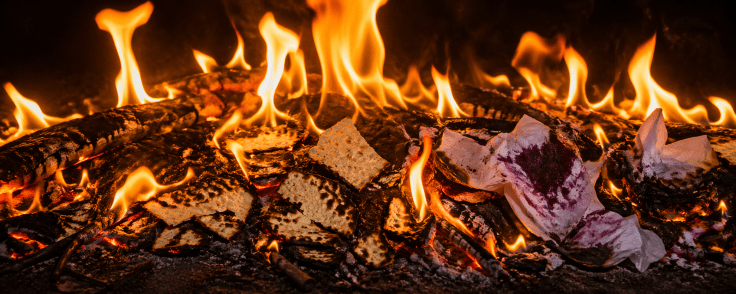
Handling the Remaining Elements of the Lord’s Supper
The remaining elements of the Lord’s Supper must not be handled casually. Once they have been set apart in the name of the Lord, they are considered holy and must be treated according to holy principles. The Old Testament already provides a pattern: they must not be left until the next morning.
(Exodus 12:10) “Do not leave any of it till morning; if some is left till morning, you must burn it.”
Reason 1: The Lord’s body and blood are holy and must not be allowed to decay or be treated carelessly.
(Psalm 16:10) “Because You will not abandon me to the realm of the dead, nor will You let Your Holy One see decay.”
Reason 2: The Lord’s body and blood are holy and must not be discarded or treated lightly.
(Hebrews 10:29) “How much more severely do you think someone deserves to be punished who has trampled the Son of God underfoot, who has treated as an unholy thing the blood of the covenant that sanctified them, and who has insulted the Spirit of grace?”
The Attitude After Receiving the Lord’s Supper
1. To be determined to live for the Lord, because He loved us and gave Himself for us
(2 Corinthians 5:14–15) “For Christ’s love compels us… that those who live should no longer live for themselves but for Him who died for them and was raised again.”
(Romans 14:7–8) “For none of us lives for ourselves alone… If we live, we live for the Lord; and if we die, we die for the Lord…”
Explanation:
The Lord’s Supper is not only remembrance and receiving, but also brings forth a response in life.
Since the Lord has given Himself for us, we have also died and been buried with Him (Romans 6:3–4). Therefore, believers no longer belong to themselves, but to the Lord.
(Romans 6:3–4) “All of us who were baptized into Christ Jesus were baptized into His death… so that… we too may live a new life.”
Therefore, after receiving the Lord’s Supper, one should not return to a self-centered life, but be determined to live for the Lord, responding to His love and redemption in daily life.
Summary:
➡️ Since the Lord gave Himself for us, we should no longer live for ourselves, but for Him.
2. To live a holy life, as after the Passover comes the Feast of Unleavened Bread
(1 Corinthians 5:6–8) “…Don’t you know that a little yeast leavens the whole batch… Therefore let us keep the festival… with the unleavened bread of sincerity and truth.”
(Exodus 12:15) “For seven days you are to eat bread made without yeast…”
Explanation:
After the Passover comes the Feast of Unleavened Bread, showing that after receiving redemption, one must enter into a life of removing leaven.
The New Testament applies this directly to believers: since Christ is our Passover Lamb, believers must remove the old leaven and live a life set apart.
Therefore, after the Lord’s Supper, one does not return to the old state, but enters into a life of continually dealing with sin and turning away from corruption, living out a holiness that matches what has been received.
Summary:
➡️ After receiving the Lord’s Supper, believers must remove sin and corruption, and live a holy life.
3. To love one another and pursue unity, being united not only with the Lord but also with fellow believers, since we partake of one bread
(1 Corinthians 10:17) “Though we are many, we are one bread and one body, for we all partake of the one bread.”
(1 Corinthians 12:12–13) “…just as a body… has many parts… so it is with Christ… we were all baptized by one Spirit so as to form one body…”
Explanation:
The Lord’s Supper not only shows union with the Lord, but also reveals unity among believers.
Since we partake of one bread, we become one body—this is not symbolic, but a spiritual reality.
Therefore, after receiving the Lord’s Supper, believers must not be divided or separated from one another, but should love one another and pursue unity in the Lord, living out the reality of one body.
Summary:
➡️ Since we partake of one bread, we must be one body and pursue true unity in love.
4. To look forward to the Lord’s return, the resurrection at the last day, and returning to the heavenly home
(1 Corinthians 11:26) “…you proclaim the Lord’s death until He comes.”
(John 6:54) “Whoever eats My flesh and drinks My blood has eternal life, and I will raise them up at the last day.”
(Revelation 19:7–9) “…the wedding of the Lamb has come… Blessed are those who are invited to the wedding supper of the Lamb…”
Explanation:
The Lord’s Supper not only looks back to Christ’s death, but also points forward to His return.
“Until He comes” shows that believers live in hope—not remaining in the past, but waiting for His appearing.
At the same time, the Lord promises resurrection at the last day and reveals the final entrance into the wedding feast of the Lamb.
Therefore, after receiving the Lord’s Supper, believers should live with hope, waiting for the Lord’s return, and preparing themselves for eternal destiny.
Summary:
➡️ The Lord’s Supper places believers in hope, waiting for the Lord’s return and preparing for eternal glory.
Leave a Reply